Most people view “Smart Home” technology as a luxury, a hobby, or a collection of toys. At Total System Health, we view it as Essential Infrastructure. Home Optimization transforms your living space into an efficient, low-stress system that actively reduces energy waste, financial friction, and daily decision fatigue.
Your home is an extension of your biological system. A home that is inefficient, poorly lit, or wasting energy creates a “High-Friction” life. By applying systemic engineering to your environment, you can automate your surroundings to align with your biological needs and financial goals.
The Three Pillars of Home Optimization Infrastructure
To achieve a high-performance living environment, we focus on three distinct areas where technology meets biology.
1. Energy Intelligence & Financial Transparency
You cannot optimize what you cannot measure. In most homes, the electrical panel is a “black box” that only reveals its secrets once a month through an expensive utility bill. By installing high-accuracy energy monitors, you turn that panel into a live diagnostic scan of your home’s metabolism.
This transparency allows you to identify “Vampire Loads”—devices that silently drain power while appearing to be off. Identifying and eliminating these loads is the fastest way to generate a high Return on Investment (ROI), freeing up capital for other health-building systems.
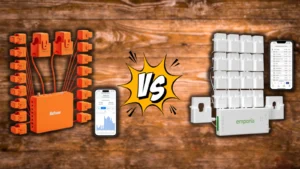
System Deep Dive: Emporia Vue 3 vs. Refoss EM16: Which Energy Monitor Is the “Diagnostic Scan” Your Home Needs?
2. Circadian Lighting & Biological Atmosphere
Human biology is governed by the solar cycle. For thousands of years, our bodies used light as a signal to produce either cortisol (for energy) or melatonin (for sleep). Modern home lighting has broken this signal, often flooding our environments with blue light long after the sun has set.
Smart home optimization focuses on Circadian Lighting Systems. These systems use automation to shift the color temperature of your home throughout the day—mimicking the sun’s natural progression. By reducing blue light exposure in the evening, you protect your sleep architecture and systemic recovery. (Detailed Reviews Coming Soon).
3. Climate Control & Structural Integration
A healthy home maintains a consistent, optimized climate without requiring constant manual intervention. This is not just about comfort; it is about protecting the home’s infrastructure. High humidity can lead to mold growth (affecting your Environmental Purity), while inefficient heating increases systemic financial stress.
By integrating smart thermostats with energy monitoring and local weather data, we create a “Climate Loop.” This loop balances air quality and temperature with massive energy efficiency, ensuring your home remains a sanctuary rather than a source of maintenance stress.
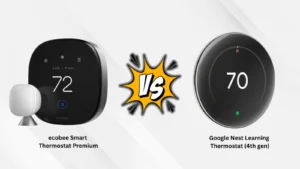
System Deep Dive: The Smart Climate Brain: ecobee Smart Thermostat Premium vs. Google Nest (4th Gen)
The Strategic ROI of a System-Based Home
Why go through the effort of optimizing your home? The Return on Investment (ROI) is measured in two distinct “currencies.”
The Financial ROI: Protecting the Infrastructure
- Reduced Utility Waste: Most optimized homes see a 10–15% reduction in annual energy spend.
- Appliance Longevity: Monitoring energy spikes allows you to identify failing appliances before they cause a catastrophic flood or fire.
- Future-Proofing: An optimized home is “Solar-Ready” and “Smart-Grid Ready,” increasing its total resale value.
The Biological ROI: Reducing Systemic Load
- Reduced Decision Fatigue: When your lights, climate, and security are automated, you save “cognitive bandwidth” for more important tasks.
- Improved Recovery: A home that supports your natural sleep cycle through lighting and temperature control improves every aspect of your physical health.
- Low-Stress Environment: Eliminating the “micro-frictions” of daily life (searching for switches, worrying about a left-on oven) lowers your baseline cortisol levels.
How to Begin Your Home Optimization Journey
We recommend an “Infrastructure-First” approach. Rather than buying individual gadgets, focus on the “Brain” of your home first.
- Start with Data: Install an energy monitor to see your home’s “vital signs.”
- Control the Climate: Upgrade to a smart thermostat that can talk to your energy monitor.
- Refine the Light: Swap out high-occupancy bulbs for smart-circadian versions.
Home optimization is not about adding complexity—it is about removing the friction that prevents you from thriving. An optimized home doesn’t just save money; it saves your most valuable resource: your energy.
- ecobee vs Nest 4th Gen: The Smart Thermostat Decision That Actually Matters (2026)
 [TOTAL SYSTEM NOTE] ecobee vs Nest 4th Gen is not a typical smart thermostat comparison — it’s a system-level analysis of how each device impacts indoor air quality, energy efficiency, and long-term home health. To see how it works with your energy infrastructure, read our breakdown of the Emporia Vue 3 vs Refoss EM16 Energy
 - Emporia Vue 3 vs. Refoss EM16: Which Energy Monitor Is the “Diagnostic Scan” Your Home Needs?The Emporia Vue 3 is the better choice for most homeowners — polished app, indefinite cloud history, native solar net metering, and the easiest setup path of any 16-circuit monitor on the market. At $199.99, it pays for itself in under 12 months for the average household running two or more undetected vampire loads. The