
Total System Health is reader‑supported. When you purchase through links on our site, we may earn an affiliate commission at no additional cost to you. For more details, please see our Privacy Policy.
TSH Verdict — Compression Boots 2026
JetBoots Prime wins for daily home recovery. Normatec 3 wins for clinical injury management.
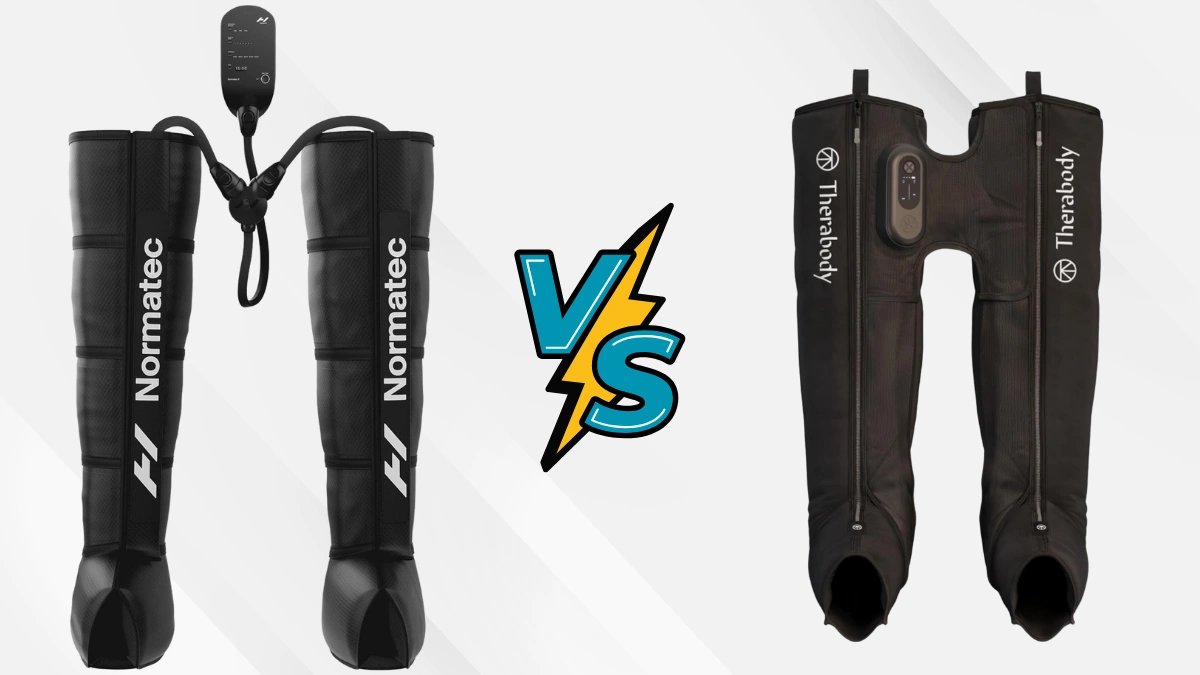
The Therabody JetBoots Prime ($549.99) is the smarter daily-use system — wireless, zero-friction setup, and paid off in just 16 sessions at $35/clinic equivalent. The Hyperice Normatec 3 ($899.99) is the clinical precision choice — 5-zone coverage that reaches the hip/groin lymphatic junction, ZoneBoost™ for targeted injury treatment, and 10 extra mmHg when you need deep therapeutic pressure. Both hit the 100–110 mmHg clinical sweet spot. The difference is your recovery style, not the biology.
🏆 Daily Recovery Winner
Therabody JetBoots Prime
Wireless · 4 zones · 100 mmHg · FastFlush 60-sec cycle · 180-min battery · Breakeven: 16 sessions
Check Price on Amazon →⚕️ Clinical Precision Pick
Hyperice Normatec 3
5 zones · Hip/groin coverage · 110 mmHg · ZoneBoost™ +10 mmHg · Hosed · Breakeven: 26 sessions
Check Price on Amazon →💳 FSA/HSA Eligible: Both devices qualify as medical recovery equipment. At a 30% tax bracket, that’s ~$165 off the JetBoots and ~$270 off the Normatec 3 — paid with pre-tax dollars. 2026 HSA limit: $4,300 individual / $8,550 family. See full tax savings breakdown →
Total System Note: Compression boots are the third phase of the Total System Health Recovery Trinity. Before your session: use a vibration plate to mobilize interstitial waste, then an infrared sauna to open vasculature and initiate the sweat response. The boots execute the final flush. After your session: hydrate with high-purity filtered water to support kidney processing of mobilized waste.
Vascular Logistics and the Role of Compression Boots
Compression therapy with compression boots is the final ‘pumping’ stage… Heavy legs, delayed recovery, and persistent fatigue aren’t just signs of overtraining—they are critical indicators of a bottleneck in your vascular and lymphatic network. This isn’t a surface-level issue; it’s a foundational problem of system stagnation. While hydration and nutrition deliver raw materials, and exercise creates demand, the system that removes waste—lactic acid, pro-inflammatory cytokines, and lipid peroxides—is often the limiting factor in human longevity.
This guide examines Intermittent Pneumatic Compression (IPC) systems not as luxury gadgets but as essential home health infrastructure. We provide a technical audit of two market leaders, Therabody RecoveryAir JetBoots and Hyperice Normatec 3, to determine which system offers superior value for a complete recovery loop. This is the final component in the Total System Health Recovery Loop, ensuring that once waste is mobilized, it is effectively flushed from the extremities and processed by the core.
The Science of Flow: Understanding the Human Hydraulic System
Optimal health is a function of flow. Your circulatory system is a closed-loop hydraulic network where the heart provides the primary pump. However, the return journey of deoxygenated blood and lymph from your extremities relies on a secondary, mechanical system: the Skeletal Muscle Pump.
During leg muscle contraction, increased intramuscular pressure squeezes deep veins, forcing blood upward against gravity toward the heart via one-way valves. A sedentary lifestyle, aging, or even prolonged standing directly weakens this pump, leading to Lymphatic Congestion, fluid stagnation, and a rising Interstitial Fluid burden of metabolic byproducts.
The consequence is a classic system bottleneck: fresh, oxygenated blood delivery is hampered by a drainage system clogged with waste. This is where IPC systems intervene—not as a temporary fix, but as mechanical infrastructure designed to augment and automate this failing biological pump.
IPC Explained: The Science Behind the Squeeze
Intermittent Pneumatic Compression (IPC) is the clinical term for what are often called recovery boots. These systems consist of multi-chambered sleeves that inflate and deflate rhythmically, creating a wave of external pressure that mimics—and often surpasses—the effect of the natural Skeletal Muscle Pump.
The engineering is precise and purposeful. Here’s how it solves the vascular logistics problem:
- Mimicking the Muscle Pump: By sequentially compressing the limb from distal (ankle) to proximal (thigh), IPC creates a physiological pressure gradient. This actively propels venous return and lymphatic drainage.
- Clearing Metabolic Byproducts: This accelerated flow enhances the removal of systemic waste products like 2-Nonenal. As we explored in our guide on eliminating aging body odor, 2-Nonenal is an aldehyde formed by the oxidative breakdown of skin lipids. Its presence is a marker of slow metabolic clearance, which IPC addresses by improving underlying microcirculation.
- The Pressure Standard (mmHg): Effectiveness is measured in mmHg (millimeters of mercury). While clinical lymphedema management often stays below 40 mmHg, enhancing athletic recovery requires a higher “Vascular Flush.”
The Clinical “Sweet Spot”: 100–110 mmHg
Evidence suggests that pressure in the range of 100–110 mmHg is optimal for maximizing venous return without impeding arterial inflow. A peer-reviewed clinical trial published on PubMed (National Library of Medicine) confirms that IPC therapy measurably reduces limb volume and improves quality of life — and that regular, consistent use is required to maintain those results. This level provides a deep, therapeutic compression that effectively “milks” the venous and lymphatic vessels, promoting a significant systemic flush.
| Solution Type | Mechanism of Action | Systemic Impact | Long-Term Role |
| Topical Creams | Temporary vasodilation | Superficial only; no fluid movement | Disposable consumable |
| Compression Socks | Static, constant pressure | Passive support; improves tone | Assistive wear |
| Manual Massage | Hand-applied pressure | Effective but non-scalable | Outsourced service |
| IPC Infrastructure | Dynamic Gradient Compression | Active hydraulic pumping | Owned Health System |
Therabody JetBoots Prime Compression Boots: Wireless Recovery Engine
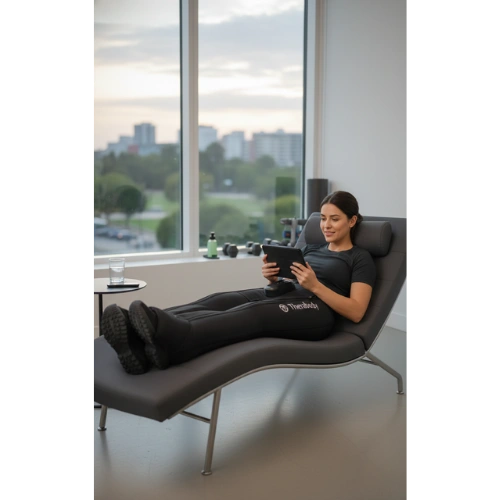
The Therabody JetBoots Prime redefines the core paradigm of recovery infrastructure by eliminating the central control unit. Its Wireless Architecture integrates the motors and controls directly into the foot of the boots, creating a completely self-contained system.
This design is more than a convenience; it is a commitment to frictionless Repeatable Recovery. For a home longevity system to be effective, it must be used consistently. By removing external hoses and separate pumps, Therabody ensures that the barrier to starting a session is near zero.
→ Check current JetBoots Prime price and availability on Amazon
The Physics of the Vascular Flush
Inside each boot, four overlapping chambers deliver TruGrade Technology™. This proprietary system applies a true negative pressure gradient from the feet toward the heart.
- The Technical Execution: The system decreases the applied pressure by approximately 1 mmHg per chamber as compression moves proximally (up the leg).
- The Goal: This refined gradient maximizes fluid movement while maintaining safety by avoiding excessive back-pressure on the venous valves.
The system’s efficiency is supported by FastFlush Technology™, which completes a full inflation and deflation cycle in just 60 seconds. This rapid cadence allows for more “waves” per session, significantly increasing the total volume of Interstitial Fluid mobilized. With a 180-minute battery life and a max pressure of 100 mmHg, the JetBoots Prime is the premier choice for the user who prioritizes daily maintenance and travel-ready infrastructure.

- RECOVER ANYWHERE WITH ULTRA-PORTABLE DESIGN: Lightweight design folds up like a pair of pants and is compact enough to f…
- SIMPLE, BUILT-IN CONTROL PANEL FOR CUSTOMIZABLE TREATMENTS: One-touch control panel and LED indicators built right into …
- PROPRIETARY TruGrade Technology: Delivers precise, science-backed pressure levels tailored to the size of your leg throu…
Hyperice Normatec 3 Compression Boots: Clinical Precision
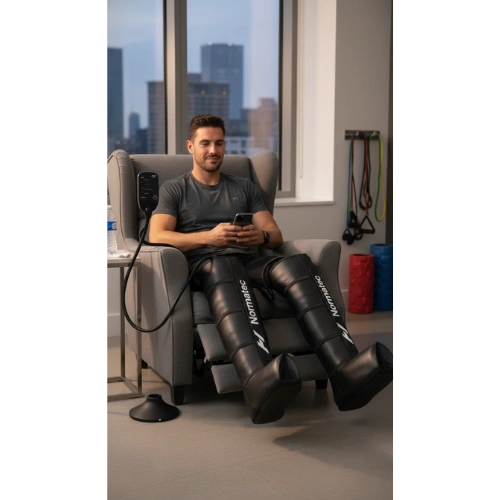
Where the JetBoots Prime excels in systemic repeatability, the Hyperice Normatec 3 is engineered for Clinical Precision. It employs a traditional hosed architecture, connecting the boots to a central control unit, allowing for a more powerful pump and granular programming.
→ Check current Normatec 3 price and availability on Amazon
The 5th Zone: The Hip/Groin Junction
A critical differentiator of the Normatec 3 is its 5-Zone Configuration. While most consumer systems target the foot, calf, and lower thigh, the Normatec adds a fifth zone that extends to the Hip/Groin Junction.
In the Total System Health framework, this is a strategic necessity. The inguinal nodes located in the groin are the primary convergence point for Lymphatic Drainage from the entire lower body. By applying compression to this specific area, the Normatec system actively facilitates the final transition of lymph into the central circulatory system, addressing the ultimate bottleneck in systemic waste clearance.
ZoneBoost™: Therapeutic Deep-Dives
The Normatec’s most powerful tool for injury management is ZoneBoost™ Technology. This feature allows the user to apply an extra +10 mmHg of pressure to a single, specific chamber for 60-second intervals. Whether you are dealing with a sore knee or specific calf tightness, this allows for a “dwell time” that standard gradients cannot provide. With seven pressure levels reaching a maximum of 110 mmHg, the Normatec 3 is a medical-grade workstation for those managing specific injuries or chronic Lymphatic Congestion.

- Warm-up and recover like never before. The Normatec 3 uses dynamic air compression to create a restorative massage that …
- 7 levels of compression and our patented Pulse technology deliver precise treatment to 5 overlapping zones with ZoneBoos…
- Normatec 3’s refreshed system design features an intuitive interface, reduced weight, and the ability to unlock next-lev…
The 30-Second Tradeoff: System Design Philosophy
| Specification | Therabody JetBoots Prime | Hyperice Normatec 3 |
|---|---|---|
| Price (MSRP) | ~$549.99 | ~$899.99 |
| FSA / HSA Eligible | ✅ Yes | ✅ Yes |
| Architecture | ✅ Fully Wireless | Hosed + Control Unit |
| Compression Zones | 4 Overlapping Chambers | ✅ 5 Zones (incl. Hip/Groin) |
| Max Pressure | 100 mmHg | ✅ 110 mmHg |
| Pressure Levels | 7 Levels | 7 Levels |
| Cycle Speed | ✅ FastFlush™ — 60 sec | Standard — 3–4 min |
| Targeted Zone Boost | ❌ Not available | ✅ ZoneBoost™ +10 mmHg |
| Battery / Power | ✅ 180-min battery (cordless) | Corded (AC power) |
| App Control | Therabody App (iOS/Android) | Hyperice App (iOS/Android) |
| Session Duration | Up to 30 min | Up to 30 min |
| Portability | ✅ Travel-ready, no hub needed | Requires control unit + hoses |
| Clinic Breakeven | ✅ 16 sessions @ $35/clinic | 26 sessions @ $35/clinic |
| Best Use Case | Daily maintenance, travel, home routine | Injury management, clinical protocols, deep lymphatic work |
| TSH Verdict | Best for Daily Recovery | Best for Clinical Precision |
The choice between these systems reflects a priority in your Internal Longevity infrastructure. The JetBoots Prime champions a wireless design for the user whose schedule demands a grab-and-go ritual. The Normatec 3 offers the customization of a hosed system for the user who views recovery as a dedicated, clinical session.
The Tax-Advantaged Purchase: FSA & HSA Savings on Compression Boots
Both the Therabody JetBoots Prime and Hyperice Normatec 3 are classified as FSA/HSA eligible medical recovery devices — not a loophole, but a recognition of their legitimate clinical function in vascular and lymphatic health. Purchasing with pre-tax dollars turns your tax bracket into an instant discount. Here’s exactly what that means for your wallet.
| Tax Bracket | JetBoots Prime (~$549.99) | Normatec 3 (~$899.99) | You Effectively Pay |
|---|---|---|---|
| 22% Bracket | Save ~$121 | Save ~$198 | ~$429 / ~$702 |
| 30% Bracket | Save ~$165 | Save ~$270 | ~$385 / ~$630 |
| 35% Bracket | Save ~$192 | Save ~$315 | ~$358 / ~$585 |
2026 HSA Limits
$4,300 Individual | $8,550 Family
2026 FSA Limit
$3,300 Per Year
Both Devices
FSA + HSA Eligible ✅
How to Buy Compression Boots with FSA/HSA Funds (3 Steps)
Verify your plan covers IPC devices
Call the number on your FSA/HSA card or log into your benefits portal. Search for “Intermittent Pneumatic Compression” or “IPC recovery device.” Most plans cover both products — the Normatec 3 Amazon listing explicitly states FSA-HSA eligibility.
Get a Letter of Medical Necessity if required
Some FSA administrators require a physician’s note for recovery devices. Ask your doctor to reference “venous insufficiency management” or “post-surgical lymphatic drainage support” — both are legitimate clinical indications that align with how IPC devices are classified by the IRS.
Purchase via your FSA/HSA card on Amazon
Both devices are available on Amazon. Pay directly with your FSA/HSA debit card at checkout — no reimbursement forms needed. Keep your order confirmation as documentation. The savings hit immediately at purchase.
📊 Tracking what your FSA/HSA purchases actually cost your home? The Emporia Vue 3 vs Refoss EM16 guide shows how a home energy monitor gives you a real-time diagnostic scan of every device running in your recovery ecosystem — so you know exactly what each session costs in electricity, on top of your pre-tax savings.
Owning compression boots eliminates time friction and turns recovery into owned infrastructure. Both compression boots qualify as FSA/HSA-eligible medical devices.
Financial ROI: The 30-Session Payback Model
To understand the true value of these systems, we must look past the initial price tag and analyze the Total Cost of Ownership (TCO). The common alternative is the “Recovery Lounge” or “Biohacking Lab” model, where a single 30-minute compression session typically costs $35.
For anyone committed to regular systemic flushing, the “rental” model is financially unsustainable. We use a simple payback framework to demonstrate the shift from a recurring expense to an owned asset:
| Recovery Model | Therabody JetBoots Prime | Hyperice Normatec 3 |
| Upfront Investment | ~$549.99 | ~$899.99 |
| Cost per Clinic Session | $35 | $35 |
| Breakeven Point | ~16 Sessions | ~26 Sessions |
| Annual ROI (2x/week) | Paid off in < 2 Months | Paid off in < 3 Months |
Stop Renting Your Recovery; Own the Pump
The mathematical imperative is inescapable. If you use the JetBoots Prime just 16 times—roughly twice a week for two months—you have already reached the breakeven point. Every session after that is pure biological profit.
Furthermore, owning the infrastructure removes the “Time Friction” of recovery. There is no commute, no scheduling, and no recurring membership fee. You gain the ability to perform a Vascular Flush immediately after a flight, a long workday, or a high-intensity session in your Home Infrared Sauna. The infrastructure does not tire, its quality does not fluctuate, and it remains a permanent, appreciating asset in your personal health ecosystem.
Compression Boots FAQ
The most common questions about JetBoots Prime vs Normatec 3, answered from a systems perspective.
TSH Interactive Tool
Compression Boot Recovery ROI Calculator
Enter your situation — get your personalized payback timeline and system recommendation.
Recovery Trinity Integration with Compression Boots
Viewing compression boots as a standalone solution is a common engineering oversight. Their true biological potential is unlocked when utilized as the final component in an integrated Recovery Trinity—a closed-loop system designed for total metabolic clearance. Within this protocol, IPC systems function as the indispensable “Mechanical Closer.”
This sequenced protocol is engineered for maximum hydraulic efficiency:
- Phase 1: Mobilize (Whole-Body Vibration): The process begins here. High-frequency oscillations mechanically shear the interstitial space, shaking loose metabolic byproducts like lactic acid and 2-Nonenal precursors from tissue, priming them for transport.
- Phase 2: Open (Infrared Sauna): Next, Infrared heat induces profound vasodilation. This deep heating expands the capillary network, dramatically increasing vascular capacity and initiating the sweat response to begin expelling toxins through the skin.
- Phase 3: Flush (IPC Compression Boots): This is where the boots execute their core function. Acting as a powered Skeletal Muscle Pump, their rhythmic gradient pressure (100–110 mmHg) actively pumps the mobilized and heated fluid load. This Vascular Flush drives waste-laden lymphatic drainage toward the core for final processing and elimination.
This integrated approach is common among elite biohackers. For example, fitness expert Sarah Bowmar utilizes a nightly “Trinity” of Infrared Sauna, followed by Normatec compression, and finishing with Red Light therapy. By owning this infrastructure, you operate a 24/7 maintenance loop for your body’s hydraulic health.
Which Compression Boots Are Right for You?
The biology is identical — both systems deliver clinical-grade IPC in the 100–110 mmHg sweet spot. The decision comes down to how you recover, where you recover, and what problem you’re solving. Here’s how to know exactly which system belongs in your infrastructure.
🏆 Daily Recovery Winner
Therabody JetBoots Prime — Buy This If…
⚕️ Clinical Precision Pick
Hyperice Normatec 3 — Buy This If…
Total System Health Verdict
For most people building a home recovery system: JetBoots Prime. For injury management or clinical lymphatic work: Normatec 3.
The JetBoots Prime wins on the metric that matters most for long-term health outcomes: consistency. A wireless system you use daily beats a clinical-grade system you use occasionally. If you’re healthy, training regularly, and want compression as a permanent fixture in your recovery loop — the JetBoots is the right infrastructure. If you’re managing an active injury, post-surgical lymphatic drainage, or require hip/groin zone coverage — the Normatec 3 is the clinical tool for the job. Both are FSA/HSA eligible, both pay off in under 3 months versus clinic pricing, and both belong in the final stage of the Recovery Trinity.
From Masking to Mastering Systemic Flow
The sensation of heavy legs is hydraulic feedback—a biological signal of venous insufficiency and lymphatic congestion. Intermittent Pneumatic Compression (IPC) provides the engineered countermeasure.
Financially, the logic of ownership is inescapable. Utilizing FSA/HSA eligible funds transforms a capital outlay into a tax-advantaged investment with a rapid, sub-30-session payback period. Once the system is paid off, you stop “renting” recovery and start owning the infrastructure.
To complete this systemic loop, remember that the “Flush” phase requires massive internal fluid volume. Always hydrate with high-purity filtered water after a session to support your kidneys as they process the mobilized waste.
This choice embodies the core Total System Health principle: Health isn’t something you consume—it’s something you engineer. Specify the pump that fits your hydraulic needs and complete your Recovery Trinity today.