
Total System Health is reader‑supported. When you purchase through links on our site, we may earn an affiliate commission at no additional cost to you. For more details, please see our Privacy Policy.
What Are Environmental Health Systems and Why Water Quality Matters
Environmental health systems are the interconnected networks that determine how water, air, soil, and human activity influence long-term health and environmental stability. Among these systems, household water quality plays a foundational role. Whole house water filtration systems act as a frontline defense within environmental health systems by reducing chemical exposure, protecting ecosystems, and supporting environmental purity at the point of daily use.
The core challenge of modern environmental health is the “triple planetary crisis”: climate change, environmental pollution, and biodiversity loss. These interconnected crises pose systemic threats to human health on a global scale. In this context, clean water is not merely a commodity but a foundational pillar of stability. It is a prerequisite for healthy ecosystems, which in turn provide essential services like food security, disease regulation, and climate resilience. Therefore, actions that protect and purify water at the household level contribute directly to the integrity and sustainability of these broader environmental health systems. This relates directly to our exploration of other foundational systems for environmental purity in the home, such as comprehensive air filtration strategies.
The Role of Household Water in Environmental Purity
The water flowing from our household taps is a critical junction in the environmental health cycle. Contaminants entering the home water supply—whether from aging infrastructure, agricultural runoff, or industrial sources—initiate a disruptive ripple effect that extends far beyond the kitchen sink.
This relationship between household water quality and environmental health systems is part of a broader environmental purity framework that includes indoor air quality, chemical exposure reduction, and sustainable home infrastructure.
When water is contaminated, its ability to support healthy ecosystems is compromised. Polluted water used for irrigation can introduce heavy metals and chemicals into the food chain, affecting soil health and crop safety. Furthermore, everyday household activities play a significant role. Chemicals that are not filtered out—such as chlorine, chloramines, and pharmaceutical residues—eventually exit our homes through wastewater. While treatment plants process this water, not all contaminants are fully removed, leading to their gradual introduction into rivers, lakes, and groundwater. This contributes to the degradation of aquatic habitats, harms biodiversity, and can even lead to harmful algal blooms that threaten recreational waters and community health. In this way, the purity of household water is inseparably linked to the purity of the local environment, forming a closed loop within our environmental health systems.
How Whole House Water Filtration Systems Work
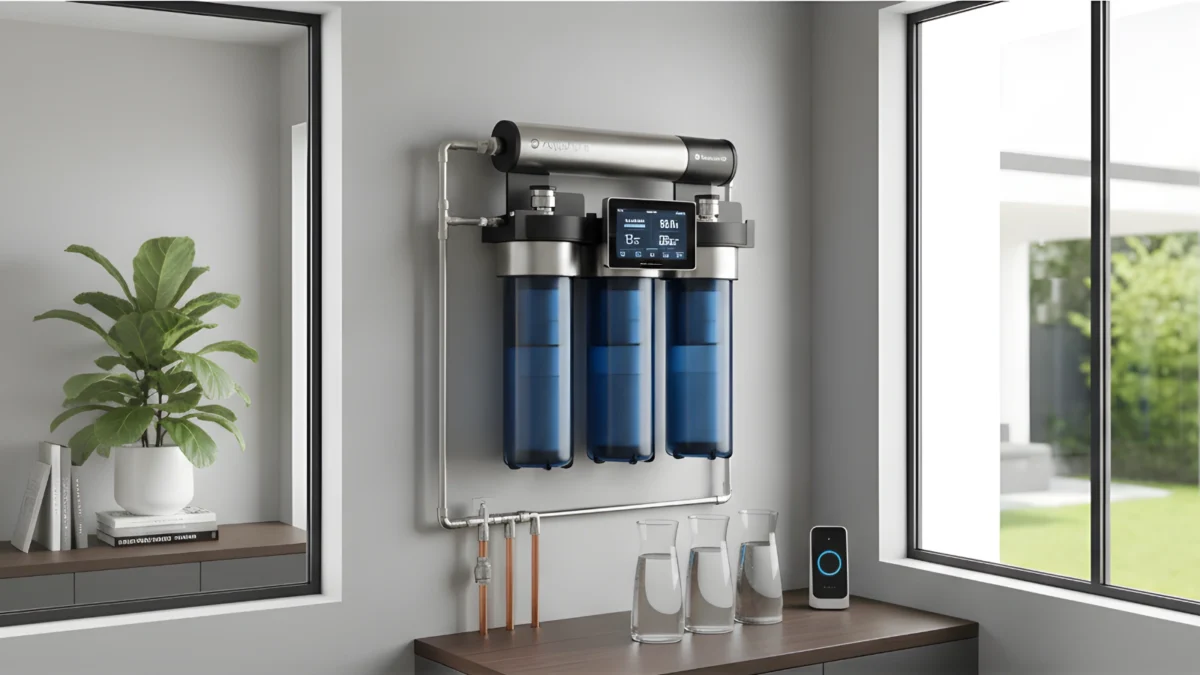
A whole-house water filtration system is a point-of-entry (POE) solution designed to treat all water entering a home, providing a uniform standard of purity at every tap and appliance. This systemic approach stands in contrast to the targeted, point-of-use (POU) strategy.
Point-of-Entry Filtration Explained
Installed at the main water line, typically where it enters the home from the municipal supply or private well, a whole-house system acts as a central processing hub. Water passes through a series of filtration stages before it is distributed to sinks, showers, washing machines, and water heaters. This ensures that water for drinking, cooking, bathing, and laundry is consistently treated, eliminating uncertainty about which water source is safe for which use.
Common Contaminants Removed
These systems utilize multiple stages of media to address a wide spectrum of concerns:
- Chlorine and Chloramines: Municipalities use these disinfectants to control microbes in public water, but they can affect taste, odor, and skin comfort. More critically, chlorine can vaporize into steam during showers, creating an inhalation risk.
- Heavy Metals: Lead, mercury, arsenic, and others can leach from aging pipes or natural deposits. Chronic exposure is linked to serious neurological, developmental, and organ damage. Studies show that while basic filters may struggle with metals like manganese and uranium, more advanced filtration technologies, including certain whole-house configurations, can effectively remove them.
- Sediment and Particulates: Rust, sand, and silt are filtered out to protect plumbing and appliances from abrasion and clogging.
- Volatile Organic Compounds (VOCs) and Pesticides: These industrial and agricultural chemicals can be adsorbed by specialized filtration media like catalytic carbon.
Difference Between Whole House Systems and Point-of-Use Filters
The choice between whole-house (POE) and point-of-use (POU, e.g., under-sink filters, pitchers) is a decision about the scale of intervention. POU filters are excellent for targeted needs, like ensuring clean drinking water at a single faucet. A whole-house system, however, provides system-wide coverage. It addresses exposure from all routes—ingestion, skin absorption, and inhalation—and protects the entire home’s plumbing infrastructure. For comprehensive risk reduction, a whole-house system acts as foundational infrastructure, much like upgrading a home’s electrical wiring for safety and efficiency.
Environmental Health Systems Benefits of Whole House Water Filtration Systems
Installing a whole-house filter extends benefits from personal health directly into the realm of environmental stewardship, reinforcing sustainable environmental health systems.
Reduced Chemical Runoff into Wastewater
By removing chlorine, chloramines, and synthetic chemicals at the point of entry, these systems prevent these substances from being washed down the drain. This reduces the chemical load entering municipal wastewater streams, lessening the burden on treatment facilities and decreasing the potential for these compounds to persist in the environment.
Lower Plastic Waste from Bottled Water
A primary driver of bottled water use is concern over tap water quality and taste. By delivering high-quality water from every tap, whole-house systems provide a reliable and convenient alternative. This can significantly reduce a household’s reliance on single-use plastic bottles, directly cutting down on plastic pollution—a major threat to aquatic ecosystems and environmental health.
Improved Indoor Environmental Quality
Water quality directly impacts the air inside your home. When showering or boiling water, volatile chemicals like chlorine can vaporize and be inhaled. By filtering these contaminants, a whole-house system improves indoor air quality. This creates a healthier immediate ecosystem within the home, which is especially important for individuals with respiratory sensitivities. This principle of managing the home’s internal environment is a key pillar of system-level health optimization.
Impact on Human Health and Long-Term Sustainability
The human health argument for whole-house filtration is rooted in reducing cumulative, low-dose exposure through multiple pathways.
- Skin Absorption and Inhalation: Dermal absorption and inhalation of vaporized chemicals during showers and baths are significant exposure routes often overlooked by drinking water filters alone. Whole-house protection ensures that water for bathing is as clean as water for drinking.
- Cumulative Ingestion: While a single glass of water may contain trace contaminant levels, the cumulative dose over a lifetime matters. Reducing this lifelong burden is a proactive, preventive health measure.
- Protection for Vulnerable Populations: Children, the elderly, and those with compromised immune systems are more susceptible to the effects of contaminants like lead, certain bacteria, or parasites. A whole-house system provides a blanket of protection for all household members, ensuring the water used to make infant formula or for an elderly person’s bath is safe.
How Whole House Filtration Supports Sustainable Environmental Health Systems
Beyond direct filtration, these systems contribute to sustainability in tangible ways that support resilient environmental health systems.
- Water Conservation: By making tap water palatable and pleasant for all uses, these systems discourage the wasteful practice of running water to “flush out” chemicals before use. They also support the use of tap water over resource-intensive bottled water.
- Reduced Strain on Municipal Infrastructure: By preventing scale-causing minerals and sediments from entering a home’s plumbing, these systems extend the life of water heaters, washing machines, and dishwashers. This reduces the volume of appliance waste and the energy required to heat water in scaled-up systems, contributing to broader resource conservation.
- Cleaner Downstream Ecosystems: As previously outlined, by reducing the chemical burden in household wastewater, these systems contribute to cleaner effluent from treatment plants. This supports healthier aquatic ecosystems downstream, which are vital for biodiversity, recreation, and community well-being.
Common Misconceptions About Whole House Water Filtration
Several myths can prevent homeowners from considering this systemic solution.
- “Municipal water is already clean.” While public water is regulated and treated for pathogens, it can still contain allowable levels of disinfectants (chlorine), disinfection byproducts, and may pick up contaminants like lead from aging service lines or home plumbing. A filter provides a final, controllable barrier.
- “Filters only help drinking water.” This is the core limitation of point-of-use filters. Up to 50% of daily chlorine exposure can occur through inhalation and skin absorption during a 10-minute shower. Whole-house systems address this full-spectrum exposure.
- “These systems harm water pressure.” Properly sized and installed systems from reputable manufacturers are designed to maintain adequate flow for modern household needs. Any minimal pressure drop is typically imperceptible and is a worthwhile trade-off for the systemic benefits gained.
How to Choose a System That Aligns with Environmental Health Goals
Selecting the right system requires a diagnostic approach, matching technology to your specific water profile and environmental objectives.
- Test Your Water: Start with a water quality test, either from an independent lab or your local utility’s annual report. Identify your specific contaminants (e.g., chlorine, heavy metals, nitrates) to choose targeted solutions.
- Understand Filtration Types: Systems often combine stages.
- Consider Maintenance and Sustainability: Factor in the long-term cost and environmental impact of replacement filters. Look for systems with long filter lifespans and recyclable components. Ensure you are willing and able to adhere to the replacement schedule for optimal performance and to prevent bacterial growth.
- Match System to Local Conditions: A home on chlorinated city water has different needs than one on a private well, which may require additional UV filtration for microorganisms.
Final Thoughts: Clean Water as the Foundation of Environmental Health Systems
A whole-house water filtration system is more than a household appliance; it is a piece of integrated environmental infrastructure. It represents a conscious decision to take stewardship of a critical resource at the point of use, directly interrupting the cycle of contamination that can flow from our communities back into the environment. By ensuring water purity for every household activity, we protect our family’s long-term health, minimize our contribution to ecological pollution, and reduce our reliance on wasteful single-use plastics. In doing so, the individual home becomes a node of positive impact within a larger environmental health system. This action embodies a systems-thinking approach: recognizing that the pursuit of personal and familial health is inextricably linked to, and supportive of, the health and sustainability of the environment we all share. Strengthening environmental health systems begins at the household level, where water filtration decisions directly influence long-term health outcomes and environmental sustainability.