
Total System Health is reader‑supported. When you purchase through links on our site, we may earn an affiliate commission at no additional cost to you. For more details, please see our Privacy Policy.
Why Water Quality Is a System-Level Health Issue
Water is the most consistent environmental input in human biology. Whole house water filtration systems address this exposure at the source, recognizing that the average American consumes one to two liters daily, but this represents a fraction of total exposure. Water is used for cooking, bathing, and inhalation as steam—a continuous, multisource input that interacts with nearly every organ system. This distinguishes water quality from other environmental concerns due to its daily, lifelong exposure.
The critical distinction lies between acute and chronic exposure. While acute contamination causes immediate illness, the greater systemic burden for most homeowners is long-term, low-dose exposure to contaminants like heavy metals, disinfection byproducts, and industrial chemicals. The human body is adept at processing occasional insults, but chronic exposure represents a persistent, low-grade challenge to biological systems, particularly detoxification pathways, the endocrine system, and cellular integrity.
Emerging evidence underscores the long-term impact of managing this exposure. A landmark 20-year study demonstrated that reducing arsenic in drinking water was associated with a significant decrease in deaths from chronic diseases, including cancer and cardiovascular conditions. This research highlights a crucial principle: reducing chronic contaminant load can yield measurable improvements in long-term health outcomes, even for individuals with prior exposure. Therefore, managing home water quality is less about preventing immediate sickness and more about optimizing a foundational element of lifelong environmental health, working in concert with other systems like home air filtration systems for comprehensive environmental purity.
What Are Whole House Water Filtration Systems?
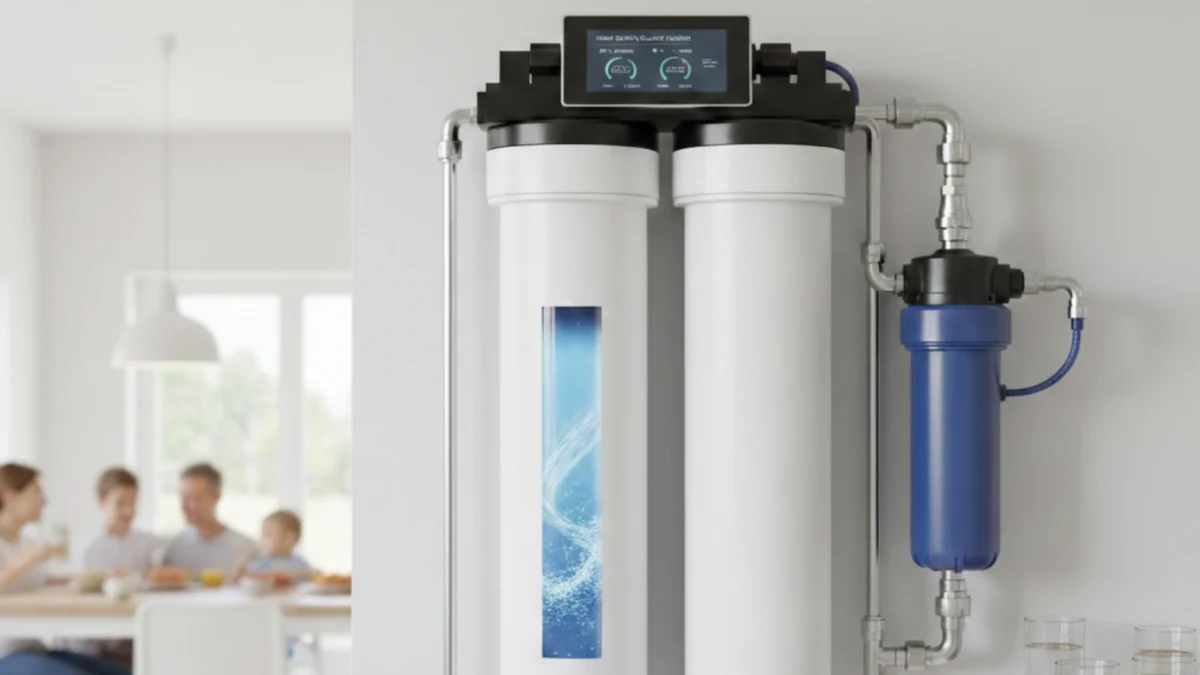
A whole house water filtration system is an integrated environmental infrastructure installed at the main water line, where it enters a home. Its purpose is to treat all water distributed to every faucet, appliance, and fixture. This distinguishes it fundamentally from point-of-use filters (like those on a kitchen sink or showerhead), which create isolated zones of treated water.
The concept of “system coverage” is literal and comprehensive. Once installed, the system operates passively on the home’s entire water supply, ensuring that water for drinking, cooking, bathing, laundry, and even garden hoses is treated consistently. This removes the burden of deciding which water is “safe” for which purpose and provides a uniform baseline of water quality. It transforms water treatment from a discretionary, point-of-use activity into a seamless, automatic utility—much like upgrading the home’s electrical system for consistent, clean power.
From a systems perspective, whole house water filtration systems function as passive environmental infrastructure rather than point-solution devices.
Common Contaminants Addressed by Whole House Water Filtration Systems
Understanding common contaminants is key to evaluating system needs. These contaminants enter water through various pathways: natural geological processes, aging municipal infrastructure, agricultural runoff, or as byproducts of treatment itself.
- Chlorine and Chloramine: These disinfectants are added by municipalities to control microbes. While crucial for public health, they can impart unpleasant tastes and odors, and may react with organic matter to form disinfection byproducts. During showers, chlorine can vaporize and be inhaled, introducing exposure through the respiratory system.
- Heavy Metals (e.g., Lead, Mercury, Arsenic): Metals can leach from natural deposits, industrial sites, or, notably, from household plumbing pipes and fixtures. Arsenic, a widespread natural contaminant in groundwater, has been strongly linked in long-term studies to increased risks of chronic disease.
- Sediment and Particulates: These include rust, sand, and silt, often from corroding pipes or natural sources. They can cause appliance wear, clog fixtures, and affect water clarity.
- Volatile Organic Compounds (VOCs) and Industrial Chemicals: These originate from pesticides, herbicides, petroleum, and industrial solvents that can seep into water sources.
- Disinfection Byproducts (DBPs): Chemicals like trihalomethanes form when disinfectants react with natural organic matter in water. They represent a trade-off of modern water treatment.
It is important to note that no single filter technology removes all contaminants. A systems approach begins with identifying the specific contaminants present through water testing, then selecting a filtration system engineered to address that profile.
Whole House vs Point-of-Use Water Filtration: System Tradeoffs
The choice between a whole-house system and point-of-use filters is a central strategic decision, hinging on priorities of coverage, cost, and control.
Whole-House Systems provide comprehensive coverage, treating every water source. This is ideal for contaminants with dermal or inhalation exposure routes, like chlorine in showers. They also protect plumbing and appliances from scale and sediment, potentially extending their lifespans. The primary tradeoffs are a higher upfront investment, the need for professional installation, and the fact that treating large volumes of water may require more frequent filter changes or systems with higher flow capacity.
Point-of-Use Systems (under-sink filters, shower filters, pitchers) offer a targeted, lower-cost entry. They are highly effective for ensuring purity at specific taps, typically for drinking and cooking. This can be sufficient for addressing lead or taste concerns at the kitchen sink. Their limitations are inherent in their design: they leave other exposure points (baths, laundry, other faucets) untreated, and they require individual maintenance. For renters or those with budget constraints, point-of-use systems are a practical and effective component of a personal environmental health strategy.
How Whole Home Water Filtration Systems Work
Most premium whole house water filtration systems use a multi-stage, sequential process. This modular design allows different filtration media to target specific contaminant groups, ensuring thorough treatment without overburdening any single component.
A typical three-stage system illustrates this principle:
- Stage 1: Sediment Filtration. This initial stage acts as a defensive barrier, removing particulate matter like rust, sand, and silt. Protecting downstream stages from clogging is crucial for maintaining system efficiency and longevity.
- Stage 2: Activated Carbon Filtration. This is the workhorse stage for chemical removal. Activated carbon, with its vast surface area, adsorbs chlorine, chloramines, many VOCs, and organic compounds that affect taste and odor. Some systems use catalytic carbon, which is also effective at reducing chloramines.
- Stage 3: Specialized Final Filtration. This stage is often customized. It may involve a fine sediment filter, a second carbon block, or media designed for specific contaminants like heavy metals.
System performance depends on two key engineering parameters: flow rate (measured in gallons per minute, GPM) and water pressure. A system must be sized to meet the home’s peak demand without causing a noticeable pressure drop. Higher flow rates require larger filter housings and media volumes to maintain adequate contact time for effective filtration.
Long-Term Ownership Considerations
Evaluating a whole house water filter requires a shift from purchase price to Total Cost of Ownership (TCO) over a decade or more. This systems perspective reveals the true investment.
- Filter Lifespan and Replacement: Filter media are consumable. Lifespans vary from six months for some carbon filters to several years for others, heavily dependent on incoming water quality and volume used. Consistent replacement is non-negotiable for sustained performance; a clogged or exhausted filter is ineffective. Owners should establish a schedule and budget for replacement cartridges.
- Maintenance Burden: Beyond filter changes, minimal maintenance is typically required. However, periodic system checks for leaks and, every few years, sanitization of the filter housings are recommended. Some systems offer “low-maintenance” pre-filters that extend service intervals.
- Durability and Warranty: The system’s housing, control valves, and bypass assemblies should be constructed from durable, corrosion-resistant materials. A robust manufacturer’s warranty (often 5-10 years on parts) is a strong indicator of expected system longevity and reduces long-term financial risk.
- Reliability: A high-quality system should operate passively for years. Reliability is engineered through simplicity of design, quality of components, and protection from temperature extremes. It functions as dependable infrastructure, not as an appliance requiring frequent attention.
Who Benefits Most From Whole House Water Filtration Systems?
This infrastructure investment aligns with specific homeowner profiles and environmental contexts.
- Families and Long-Term Homeowners: For those investing in a home for the long term, a whole-house system provides continuous protection for all occupants, which is particularly relevant for developing children who are more vulnerable to certain contaminants.
- Homes with Older Plumbing or Private Wells: Properties with aging pipes (a potential source of lead and sediment) or those reliant on untreated well water (vulnerable to bacteria, nitrates, and geological contaminants) gain significant protective benefits from comprehensive filtration.
- Individuals with Sensitivities: People with skin conditions like eczema or chemical sensitivities may benefit from the removal of chlorine and other irritants from bathing water.
- Renters and Alternatives: Renters are generally unable to install permanent whole-house systems. For them, a strategic combination of point-of-use filters—a high-quality under-sink system for drinking/cooking and filter attachments for showers—can effectively manage key exposure points within their control.
How These Systems Are Evaluated on Total System Health
Our framework for system-level health optimization evaluates interventions based on holistic, long-term criteria. Whole-house water filtration is assessed through this lens:
- System Coverage: The primary metric is the percentage of total household water exposure addressed. A whole-house system aims for 100% coverage, eliminating exposure variables and decision fatigue.
- Chronic Exposure Reduction: The focus is on the consistent, long-term reduction of contaminant load, rather than on addressing single, acute contamination events. The goal is to lower the lifelong cumulative dose of identified contaminants.
- Durability and Integration: The system is evaluated on its ability to operate reliably for years with minimal intervention, seamlessly integrating into the home’s function. It should be an invisible, dependable utility.
- Long-Term Value: Value is calculated via TCO and measured against the projected benefits: potential healthcare cost avoidance, extended appliance lifespans, and the intrinsic value of reduced environmental health risk.
Environmental Tradeoffs and Limitations
A rigorous system review must acknowledge tradeoffs and boundaries.
- Upfront Resource Cost: Manufacturing the system, its plastic housings, and the embedded energy represent an initial environmental cost. The long-term payoff comes from reducing the carbon footprint and plastic waste associated with bottled water consumption.
- Installation and Space Requirements: Installation requires a qualified plumber and adequate space (often in a basement, garage, or utility room) near the main water line. This is a permanent home modification.
- Technical Limitations: It is critical to understand that a standard whole-house system is not a complete purification solution. It typically does not desalinate water (reverse osmosis is rarely used at this scale due to flow and waste constraints), and it may not remove all dissolved solids, fluoride, or certain pathogens without specialized add-ons like UV light systems.
- The Imperfection Principle: No single system is universally “perfect.” The optimal system is the one that is correctly sized, properly maintained, and specifically configured to address the verified contaminant profile of the home’s water supply. It is a tailored component of a broader environmental health system.
Conclusion: Water Filtration as Environmental Infrastructure
The decision to install a whole house water filtration system is ultimately a decision about infrastructure. It is an investment in a foundational component of the home’s environmental health, akin to upgrading insulation or electrical wiring. The rationale centers on the management of long-term water exposure—a daily, multisource input with cumulative biological significance.
The evidence suggests that consistent reduction of low-level contaminant exposure can contribute to improved long-term health outcomes. When viewed through the lens of system-level health optimization, a whole-house system offers a passive, comprehensive, and durable strategy for managing this key environmental variable. It functions not as a gadget offering a quick fix, but as integrated infrastructure, working in concert with other elements like air quality management to create a deliberate, health-supportive living environment.