
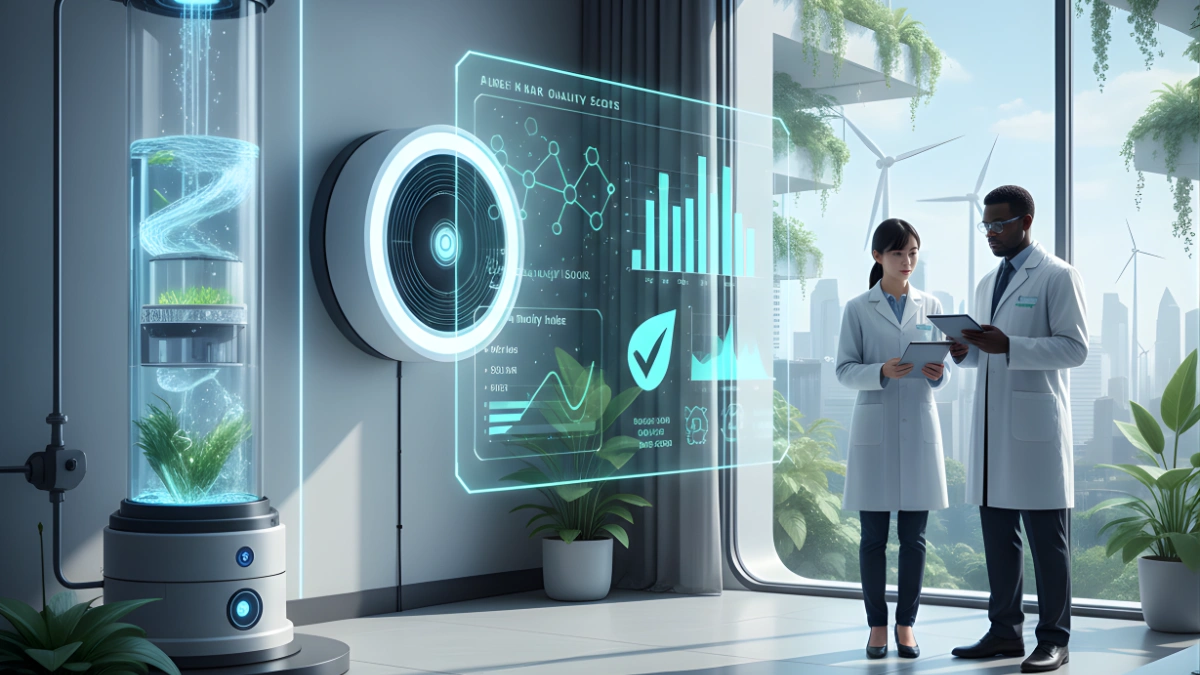
Environmental purity is not about eliminating every contaminant — it is about reducing cumulative exposure at the system level. Environmental health systems focus on how air and water inputs interact with the human body over years and decades, influencing inflammatory load, detoxification demand, immune stress, and long-term resilience.
Modern health challenges rarely stem from a single exposure. Instead, they emerge from constant low-dose contact with airborne particles, volatile compounds, and waterborne contaminants. Environmental health systems are designed to address these exposures at their source, reducing the physiological burden placed on internal biological systems over time.
What Are Environmental Health Systems?
Environmental health systems are infrastructure-level solutions that manage air and water quality across the entire living environment. Unlike isolated consumer products, systems operate continuously and passively, shaping daily exposure without requiring constant behavioral intervention.
These systems are evaluated not only on immediate performance, but on:
- Coverage area
- Exposure pathways addressed
- Durability and maintenance demands
- Long-term cost of ownership
- Interaction with human physiology
When implemented correctly, environmental health systems reduce background stressors that silently tax metabolic, immune, and detoxification processes.
Why Environmental Purity Matters for Long-Term Health
The human body is adaptable, but adaptation carries a cost. Chronic exposure to airborne particulates, chemical residues, and volatile compounds increases long-term biological workload — particularly for the liver, kidneys, lungs, and immune system.
Research consistently shows that indoor environments often contain higher pollutant concentrations than outdoor air, due to modern building materials, cleaning agents, cooking byproducts, and inadequate ventilation. Similarly, municipal water systems, while regulated, may still introduce residual disinfectants, heavy metals, and byproducts that accumulate through daily use.
Improving environmental purity is often one of the highest return-on-investment decisions for long-term health because it:
- Reduces continuous exposure rather than treating symptoms
- Operates passively without daily effort
- Supports other health interventions more effectively
Water Filtration as an Environmental Health System
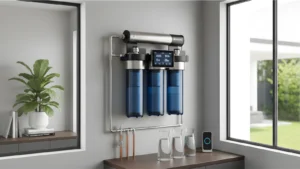
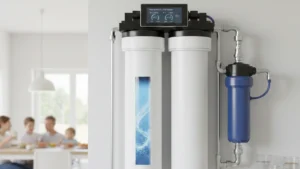
Water is a full-body exposure medium. Beyond drinking, it affects the body through bathing, showering, cooking, and skin contact. Whole-home and point-of-use water filtration systems address contaminants across these pathways rather than focusing on ingestion alone.
System-level water filtration considerations include:
- Whole-house versus point-of-use coverage
- Reduction of chlorine, heavy metals, and chemical byproducts
- Flow rate consistency and system longevity
- Maintenance frequency and filter lifespan
Water filtration systems are evaluated not as appliances, but as environmental infrastructure that influences daily chemical exposure at scale.
👉 Related system analysis:
Whole House Water Filtration Systems: A System-Level Review
Air Quality & Humidity Infrastructure
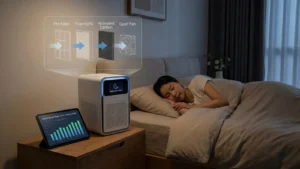
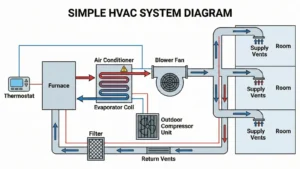
Indoor air is a high-exposure window. To achieve true purity, you must manage both particulates and moisture. High humidity grants “Biological Permission” for mold and dust mites to thrive, creating a continuous systemic load on your respiratory health.
- System Deep Dive: Santa Fe Ultra120 vs. AprilAire E100: Whole-Home Humidity Infrastructure Compared
- Home Air Filtration Systems: 7 System-Level Pros & Tradeoffs
- Portable HEPA Air Purifiers vs Whole-Home Filtration
- Best Portable HEPA Air Purifier for Bedroom Sleep
- How to Reduce Indoor Air Pollutants Naturally
How Environmental Health Systems Are Evaluated
Systems featured in the Environmental Purity pillar are evaluated based on long-term impact rather than short-term performance metrics. Key evaluation factors include:
- System coverage: How much of the living environment is addressed
- Material and build quality: Longevity under continuous operation
- Filtration effectiveness: Real-world contaminant reduction
- Maintenance burden: Ongoing effort and replacement cycles
- Total ownership cost: Long-term value versus upfront price
Products are not ranked or selected based on sponsorship or incentives. The emphasis remains on durability, coverage, and cumulative exposure reduction.
Featured Environmental System Analyses
Below are in-depth system analyses examining how air and water infrastructure choices influence long-term environmental exposure and biological load:
- Santa Fe Ultra120 vs AprilAire E100: Which Whole Home Dehumidifier Actually Protects Your Home’s Biology?
 Total System Health Note: Humidity control is the “Moisture Guard” of your home’s ecosystem. To automate this system, we recommend pairing these units with an ecobee Smart Thermostat Premium using its dedicated 24V accessory control. Quick Verdict — Skip to What Matters Choose the Santa Fe Ultra120 if your priority is total air quality: MERV-13 hospital-grade filtration, fresh-air
 - RO vs Whole House Water Filtration: Which System Does Your Home Actually Need?TSH Verdict — Water Filtration Strategy 2026 You don’t choose between RO and whole house filtration. You need both — they solve completely different problems. The Express Water WH300SCG (~$300) is your home’s shield — installed at the main water line, it strips chlorine, VOCs, sediment, and chemical load from every tap, shower, and appliance
- Water Contaminants and Their Impact on Environmental Health SystemsWhat Are Water Contaminants? Water contaminants are any physical, chemical, biological, or radiological substances found in water at a level that may pose a concern. They originate from two primary sources: natural and man-made. Water contaminants play a central role in shaping environmental health systems by influencing long-term human exposure, ecosystem stability, and household environmental
- How Whole House Water Filtration Systems Protect Environmental Health SystemsWhat Are Environmental Health Systems and Why Water Quality Matters Environmental health systems are the interconnected networks that determine how water, air, soil, and human activity influence long-term health and environmental stability. Among these systems, household water quality plays a foundational role. Whole house water filtration systems act as a frontline defense within environmental health
- Best HEPA Air Purifier for Bedroom Sleep: 4 Picks for a Health-Optimized Sleep Environment (2026)[TOTAL SYSTEM NOTE] Your bedroom air purifier is the final defense layer of your indoor environmental system. For the complete picture, see how it connects upstream: How to Reduce Indoor Air Pollutants Naturally covers the source-reduction strategies that reduce the load on your purifier, and Portable HEPA vs Whole-Home Filtration explains when a bedroom unit
- Portable HEPA Air Purifiers vs Whole-Home Filtration: System Tradeoffs ExplainedChoosing between portable HEPA air purifiers vs whole-home filtration is not merely about selecting an appliance; it is a decision about your home’s environmental infrastructure. This choice centers on a fundamental tradeoff: do you invest in a centralized, whole-home system that operates as part of your building’s core functions, or do you deploy targeted, point-of-use
- How to Reduce Indoor Air Pollutants Naturally (Science-Based Guide)Introduction: How to reduce indoor air pollutants naturally is a question of long-term exposure management, not short-term symptom control. For many, the word “pollution” conjures images of smokestacks and traffic jams. Yet, the Environmental Protection Agency (EPA) consistently reports that indoor air pollutant levels can be two to five times higher than outdoor levels, a
- Home Air Filtration Systems: 7 System-Level Pros & Tradeoffs for Long-Term HealthIntro: How Home Air Filtration Systems Work at a System Level Home air filtration systems address indoor air as a complex, continuous exposure environment. The system problem is the constant, low-level intake of airborne particulates and volatile compounds, which contribute to the body’s total inflammatory and toxic load over decades. Quick System Overview This system
- Whole House Water Filtration Systems: A System-Level ReviewWhy Water Quality Is a System-Level Health Issue Water is the most consistent environmental input in human biology. Whole house water filtration systems address this exposure at the source, recognizing that the average American consumes one to two liters daily, but this represents a fraction of total exposure. Water is used for cooking, bathing, and


Transparency & Disclosure
Some links on this site may earn a commission through Amazon at no additional cost to the reader. Products are never selected or ranked based on sponsorship.