
Total System Health is reader‑supported. When you purchase through links on our site, we may earn an affiliate commission at no additional cost to you. For more details, please see our Privacy Policy.
Intro: How Home Air Filtration Systems Work at a System Level
Home air filtration systems address indoor air as a complex, continuous exposure environment. The system problem is the constant, low-level intake of airborne particulates and volatile compounds, which contribute to the body’s total inflammatory and toxic load over decades.
Quick System Overview
This system approach is for individuals who view their home as a long-term health environment and are prepared for an upfront investment and periodic maintenance to reduce overall airborne particulate exposure. It is suited for those in areas with consistent outdoor pollution, near high-pollen vegetation, or with concerns about general indoor air quality from dust, dander, and cooking.
It may not be a priority for those in exceptionally clean air regions, in temporary housing, or for whom the primary concern is a single, specific irritant (e.g., a known mold source) that requires targeted remediation first. Those with severe respiratory or immunological conditions should consult a healthcare professional regarding environmental controls.
Why This System Matters
The rationale is one of cumulative dose. The human respiratory system processes thousands of liters of air daily. Over years, the repeated inhalation of fine particulate matter (PM2.5), allergens, and other combustion byproducts represents a significant biological processing task. Epidemiological studies consistently correlate long-term exposure to elevated PM2.5 with systemic stress. A whole-home filtration system aims to reduce this daily and lifetime dose by systematically cleaning the air circulated through a dwelling’s existing forced-air system, addressing all connected rooms uniformly and passively.
System Design & Build Quality
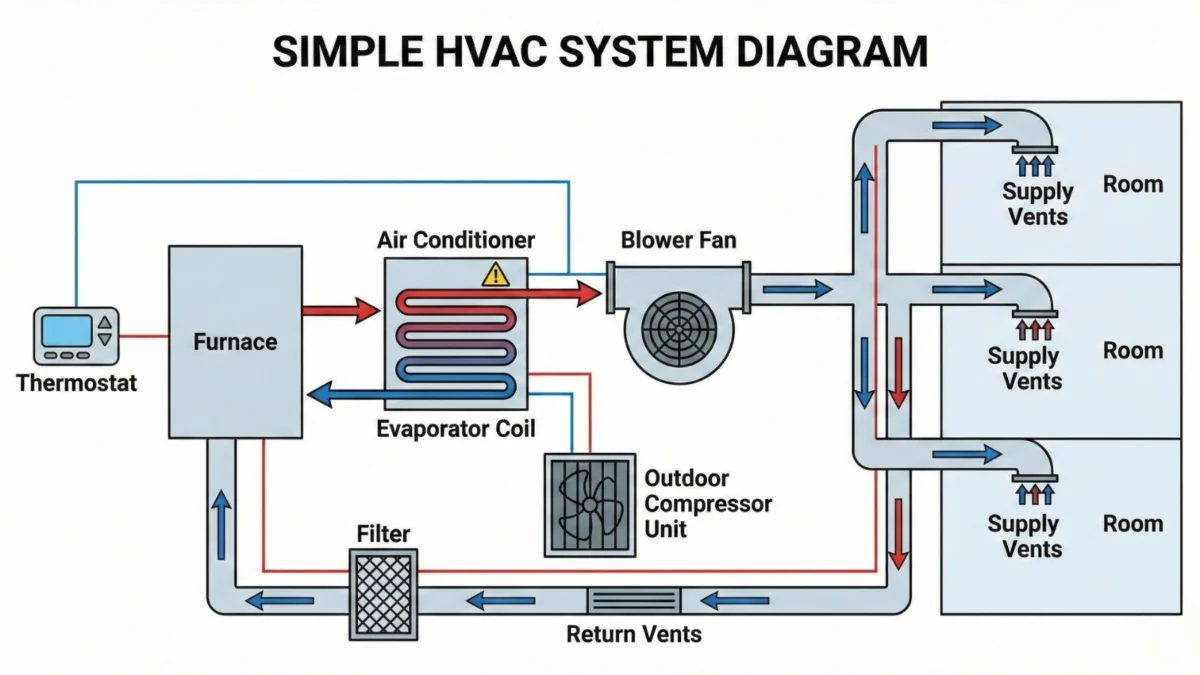
These systems are integrated into the home’s central HVAC ductwork. A typical unit consists of a heavy-gauge steel cabinet housing the filter media. Build quality is generally high, as the components must withstand constant airflow and pressure for years. The critical material is the filter media itself, often a deep-pleated, high-MERV-rated synthetic or glass fiber material. Coverage is defined by your home’s square footage and HVAC capacity. Durability is measured in decades for the cabinet, with the intended lifespan of the system matching that of the home’s HVAC blower motor, which it operates alongside. The weakest link is never the cabinet but the replaceable filter.
Filtration / Performance Scope
A high-performance in-duct system primarily addresses particulates. This includes dust, pollen, pet dander, mold spores, and a portion of fine particles from outdoor pollution and indoor activities. Performance is rated by MERV (Minimum Efficiency Reporting Value), with higher numbers indicating capture of smaller particles.
It does NOT meaningfully address gaseous pollutants like volatile organic compounds (VOCs), radon, or carbon monoxide. For these, separate activated carbon or gas-phase filtration is required. It also does not control humidity. A key limitation is its dependency on your HVAC fan running to circulate air; during mild seasons when heating or cooling is off, filtration ceases unless the fan is set to run independently. It also only filters air that passes through the return ducts, missing localized sources.
Pros & Limitations
Pros:
- Whole-Home, Passive Coverage: Treats air in all connected spaces without requiring multiple devices.
- High Volume Processing: Can filter the entire home’s air volume multiple times per day.
- Set-and-Forget Operation: Works automatically when the HVAC fan runs.
- Generally Low Long-Term Cost: After installation, ongoing costs are primarily annual or bi-annual filter replacements.
Limitations:
- Requires Compatible HVAC: Only works with forced-air furnace/AC systems.
- No Gaseous Filtration: As described above.
- Airflow Restriction: Higher-MERV filters can strain weaker HVAC blowers; professional consultation is advised.
- Inactive During HVAC Off-Cycles: Requires proactive fan management for continuous filtration.
Comparison to Alternative System Types
- Portable HEPA Air Purifiers: These are point-of-use systems. They excel at creating a clean air zone in a single room and can run continuously, independent of HVAC. They are ideal for targeted use (e.g., a bedroom), renters, or homes without ductwork. A whole-home system provides less intense filtration in any single room but provides baseline reduction everywhere.
- Standalone Air Quality Monitors: These are diagnostic, not intervention, systems. They provide data but do not clean air. They can be a useful complement to any filtration system to understand pollutant sources and effectiveness.
Long-Term Ownership Considerations
- Maintenance: The sole routine task is replacing the filter, typically every 6-12 months depending on MERV rating and home conditions. Neglect reduces performance and can damage the HVAC blower motor.
- Replacement Cycles: The filter is a recurring cost. The cabinet itself requires no maintenance beyond ensuring it is properly sealed.
- Installation Realities: Professional installation by an HVAC technician is strongly recommended. It involves cutting into the main return duct, mounting the cabinet, and sealing it properly. This represents the most significant upfront cost and logistical hurdle.
Final System Assessment
A whole-home in-duct air filtration system is an infrastructure-level investment in reducing the particulate load of your indoor environment. Its value is realized over years of consistent, whole-house operation, not in immediate symptom relief. It functions best as a foundational layer of environmental management.
Consider this system if you own a home with compatible forced-air HVAC, plan to stay for the long term, and prioritize a uniform reduction in airborne particulates across all living spaces. It is a logical choice for those who prefer a single, integrated solution over managing multiple portable units.
Do not consider this system if your primary concerns are gases/odors, if you lack a forced-air system, or if your living situation is temporary. The initial installation requires a commitment that is not suitable for short-term occupancy.
Example of a Whole-Home Filtration System
For homeowners seeking a high-performance, set-and-forget solution, the Coway Airmega ProX Whole-Home Air Purifier (Shop on Amazon) integrates seamlessly with compatible HVAC systems and continuously reduces airborne particulates throughout your home.
Selecting a Whole-Home Filtration System (What Actually Matters)
When comparing whole-home air filtration systems, performance is not determined by brand names or marketing claims. The meaningful variables are structural and operational.
Focus evaluation on:
- MERV rating compatibility with your HVAC blower capacity
- Filter surface area and depth, which determine airflow resistance and replacement frequency
- Cabinet sealing quality, as air bypass reduces real-world effectiveness
- Availability and cost of replacement filters, which determine long-term ownership cost
Systems that fail in practice usually do so not because of poor filtration claims, but because they restrict airflow, are improperly sized, or require expensive proprietary filters over time.
This analysis is part of the Environmental Purity system series, which examines how air and water infrastructure influences long-term biological stress.
Related analyses in this category examine water filtration systems, portable HEPA units, and air quality monitoring tools as complementary layers within a total environmental control strategy.