
Total System Health is reader‑supported. When you purchase through links on our site, we may earn an affiliate commission at no additional cost to you. For more details, please see our Privacy Policy.
Introduction:
How to reduce indoor air pollutants naturally is a question of long-term exposure management, not short-term symptom control. For many, the word “pollution” conjures images of smokestacks and traffic jams. Yet, the Environmental Protection Agency (EPA) consistently reports that indoor air pollutant levels can be two to five times higher than outdoor levels, a concern given that we spend approximately 90% of our time indoors. This isn’t about a fleeting odor or temporary dust; it’s the chronic, low-level exposure to a mix of volatile organic compounds (VOCs), fine particulates, biological allergens, and other toxins that contributes to what environmental health experts call the “total body burden.”
Common sources are often mundane and integrated into our living spaces: off-gassing from furniture, building materials, and household cleaners; particulate matter from cooking, candles, and outdoor air infiltration; and biological growth like mold from excess moisture. The long-term impact of this daily exposure is a growing area of study, with research linking poor indoor air quality to systemic stress, reduced cognitive function, and diminished overall resilience.
Addressing this doesn’t always require complex technology. A foundational approach begins with understanding and then leveraging natural, behavioral, and material strategies to reduce the load at its source. For those looking to build upon this foundation with advanced technological solutions, our detailed review of home air filtration systems explores system-level options designed to support cleaner indoor air across the entire living space.
Understanding Indoor Air Pollutants
To effectively reduce indoor air pollutants, it’s helpful to know what you’re dealing with. They generally fall into three categories.
Volatile Organic Compounds (VOCs)
These are gaseous chemicals emitted from solids or liquids. Common sources in homes include:
- Building Materials: Paints, varnishes, adhesives, upholstery, and manufactured wood products (like plywood or particleboard).
- Household Products: Aerosol sprays, cleaning and disinfecting supplies, air fresheners, and stored fuels.
- Activities: Smoking, cooking, or using craft supplies like glues and solvents.
Studies, such as those compiled by the EPA, note that VOC concentrations can be persistently elevated indoors and that exposure can lead to eye, nose, and throat irritation, headaches, and for some compounds, longer-term health concerns.
Particulate Matter (PM)
This refers to a complex mixture of extremely small solid particles and liquid droplets suspended in the air. They are categorized by size (e.g., PM2.5 are particles 2.5 micrometers or smaller).
- Sources: Dust, pollen, pet dander, mold spores, cooking smoke (especially from frying), burning candles or incense, and fireplace use.
- Concern: Due to their microscopic size, fine particles can be inhaled deep into the lungs and even enter the bloodstream. Long-term epidemiological research has established a clear correlation between chronic exposure to fine particulates and systemic stress on the body.
Biological Pollutants
These are living organisms or their byproducts.
- Sources: Mold and mildew from damp areas (bathrooms, basements, under sinks), dust mites in bedding and upholstered furniture, pet dander and saliva, and pollen entering from outdoors.
- Trigger: These are common allergens and asthma triggers. Managing humidity and dust is key to controlling their presence.
How to Reduce Indoor Air Pollutants Naturally
The most effective strategy is a layered one: first, prevent pollutants from entering or being created; second, dilute those that are present; and third, remove them passively. Here are actionable, natural methods to achieve this.
1. Source Control: The First and Most Important Step
Prevention is more effective than remediation.
- Choose Low-VOC Materials: When painting, remodeling, or buying new furniture, look for certifications like Greenguard Gold, which indicate low chemical emissions. Opt for solid wood, bamboo, or metal over pressed-wood products when possible.
- Revise Your Cleaning Routine: Many conventional cleaners are potent sources of VOCs. Transition to plant-based, fragrance-free cleaners, or make your own using simple ingredients like vinegar, baking soda, and castile soap. Ensure adequate ventilation when you must use stronger products.
- Manage Moisture Diligently: Use exhaust fans in bathrooms and kitchens during and for 20 minutes after use. Fix leaks promptly. Aim to keep indoor relative humidity between 30% and 50% to inhibit mold and dust mite growth. A simple hygrometer can monitor this.
- Be Mindful of Activities: Avoid burning paraffin wax candles and incense indoors. If you enjoy candles, choose beeswax or soy with cotton wicks. Always use the range hood when cooking, especially when frying or searing.
2. Dilution: The Power of Ventilation
Bringing in fresh outdoor air is the simplest way to dilute contaminated indoor air.
- Cross-Ventilation: Regularly open windows on opposite sides of your home to create a cross-breeze, efficiently flushing out stale air. Even 5-10 minutes a day can make a significant difference.
- Use Exhaust Fans: As mentioned, these are critical for removing pollutants and moisture at their point of generation (bathrooms, kitchen).
- The “Fan-Only” Mode: If you have a central HVAC system, running the system’s fan periodically (independent of heating or cooling) helps circulate air and can pull some air through the system’s filter.
3. Passive Removal: Plants and Natural Filters
While not a standalone solution, certain elements can aid in pollutant removal.
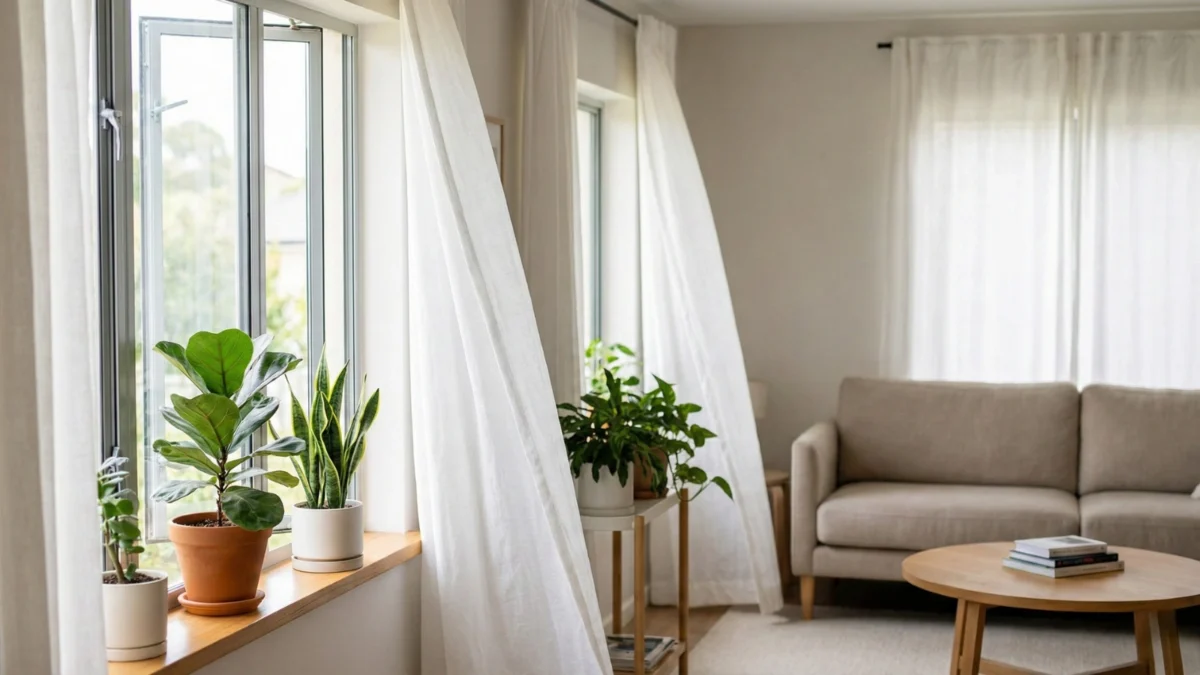
- Air-Purifying Plants: Research, including the well-known NASA Clean Air Study, has shown that certain plants can absorb trace levels of VOCs through their leaves and roots. Effective, low-maintenance options include snake plant, peace lily, spider plant, and pothos. It’s important to view plants as a complementary measure—you would need a large number to meaningfully impact the air in an entire home, but they contribute positively to a holistic strategy.
- Natural Absorption: Placing bowls of baking soda in musty-smelling areas like basements or closets can help absorb odors and some moisture. Activated charcoal bags are also marketed for this purpose and can be effective in small, enclosed spaces.
Implementing these natural strategies creates a cleaner baseline for your home’s air. For a comprehensive approach that continuously addresses particulate matter and other pollutants you cannot easily control through behavior alone, reviewing the mechanics of a whole-home air filtration system is a logical next step.
The Benefits of Cleaner Indoor Air
Investing effort into reducing indoor air pollutants yields dividends for both personal well-being and the broader home environment.
Health and Longevity Benefits
The primary benefit is the reduction of your body’s chronic toxic and inflammatory load. While individual responses vary, cleaner indoor air is associated with:
- Reduced Allergen Exposure: Fewer dust mites, mold spores, and pet dander can lead to fewer allergic reactions and asthma episodes for sensitive individuals.
- Improved Sleep and Cognitive Function: Studies have linked lower CO2 and pollutant levels to better sleep quality and improved cognitive performance in tasks requiring focus and decision-making.
- Enhanced Long-Term Resilience: By minimizing a constant source of environmental stress, you support your body’s systemic health over the long term, contributing to a proactive health maintenance strategy.
Environmental Benefits
The natural methods described also promote a healthier planetary environment.
- Reduced Chemical Runoff: Using fewer harsh chemical cleaners means these compounds don’t end down the drain and in waterways.
- Lower Carbon Footprint: Choosing durable, natural materials over synthetics and reducing consumption of disposable aerosol products lowers your overall environmental impact.
- Sustainable Practices: Managing humidity and ventilation efficiently can reduce energy costs associated with overworking dehumidifiers or air conditioners.
For homeowners who have addressed source control and ventilation and seek to ensure a consistently high standard of air purity throughout their entire living space, integrating a Coway Airmega ProX Whole-Home Air Purifier (Shop on Amazon) into the HVAC system can be a logical, set-and-forget component of a holistic home health strategy. These systems work silently in the background to filter the air circulated through every room.
Disclosure: This article contains affiliate links. As an Amazon Associate, I earn from qualifying purchases.
Conclusion
Creating a home with healthier indoor air is an achievable goal that centers on awareness and intentional action. The journey naturally begins with the steps outlined here: understanding common pollutants, focusing on source control by choosing better materials and cleaning products, diligently ventilating your spaces, and employing natural aids like plants.
These methods form a powerful, foundational layer of defense against indoor air pollution. They are sustainable, cost-effective, and put you in control of your immediate environment. For those who wish to build upon this foundation with a comprehensive, whole-home solution that provides continuous filtration, we invite you to explore our in-depth, system-level review of home air filtration systems. This guide provides the technical understanding needed to make an informed decision that aligns with a long-term view of health and home stewardship.
Discover more strategies for creating a safe and healthy living environment in our Environmental Purity category.